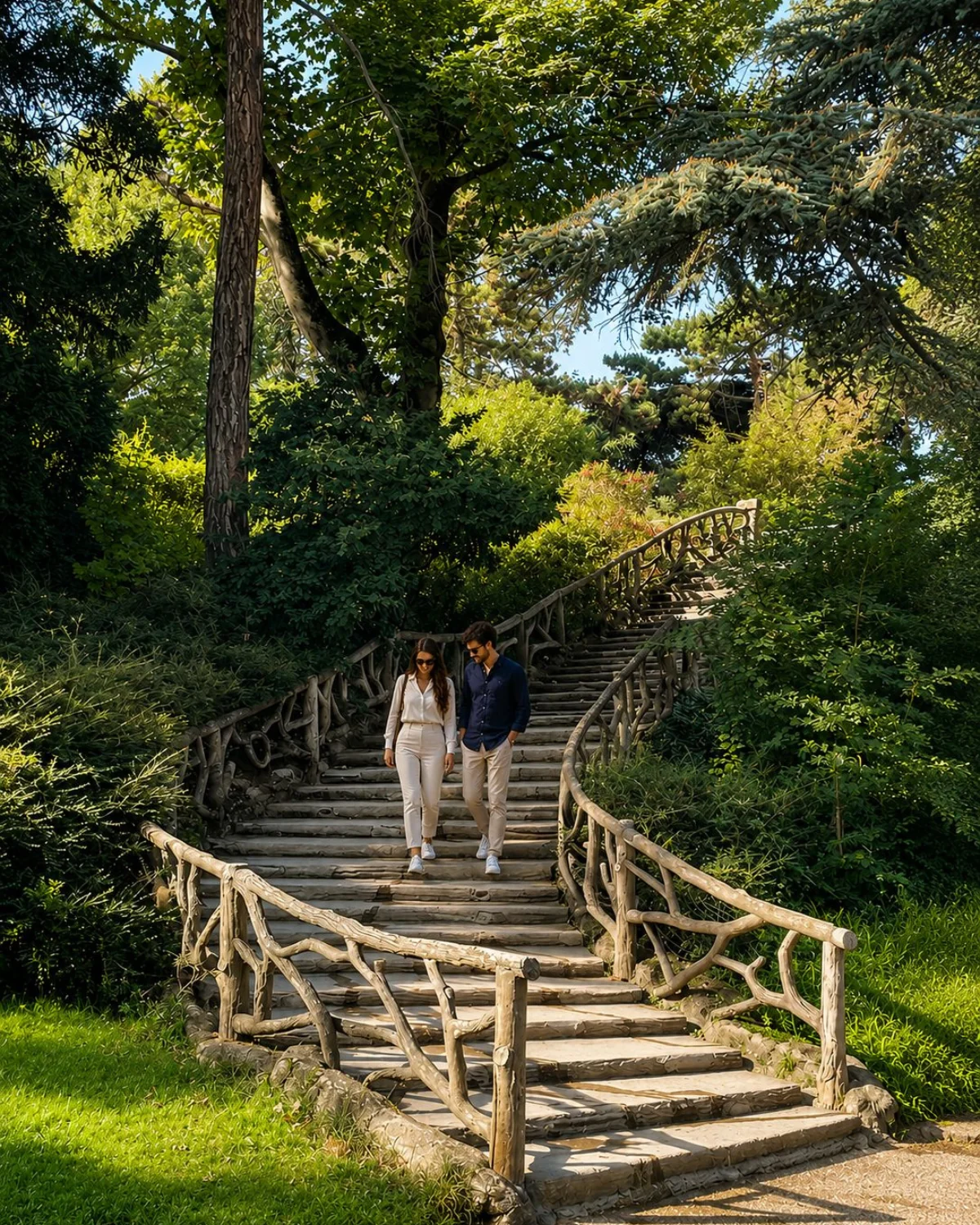
Parc Montsouris, Montparnasse, Montparnasse Cemetery: the 14th is the Left Bank soul of southern Paris. +5.8% in 2025 — one of the strongest performances in Paris, driven by the gentrification of Pernety-Plaisance. A balanced arrondissement between prestige and authenticity.
From Parc Montsouris to the terraces of Montparnasse, the 14th offers a unique Left Bank quality of life. The Catacombs, private estates and secret hamlets are the hidden treasures of this arrondissement in full appreciation.
With +5.8% in 2025 (Notaires data), the 14th shows one of the strongest performances on the Left Bank. The Pernety-Plaisance district, in full gentrification, attracts a young clientele seeking authenticity and quality of life.
The 14th arrondissement of Paris posts an average price of €9,350/sqm at the end of 2025, with annual growth of +5.8%. Average time to sell: 60 days.
An ultra-exclusive market, structurally constrained and sustained by permanent international demand.
Sources : Paris Notaires Services / Base BIEN (prix sqm T4 2025) · DRIHL 2025 (loyer encadré) · DVF DGFIP 2025 (volumes transactions)
Indice Notaires-INSEE — moyenne trimestrielle standardisée appartements anciens · 120 trimestres · 1996-2025.
The 14th arrondissement posts a median price of €9,404/sqm in 2025 (DVF, DGFIP), ranging from 6,753 to €12,143/sqm across 1,557 transactions.
With an average price of €9,350/sqm, the 14th arrondissement has a clearly defined market profile. Buyers find a specific combination of heritage, quality of life and accessibility.
49 970 energy diagnostics issued for apartments since July 2021. La classe DPE weighted average s'établit à D.
Source: ADEME — DPE Dwellings existants (since July 2021) · filtre type_batiment=appartement, code_postal_ban=75014.
Go further — prices by street, by address and by quarter: Paris 14e arrondissement on data.metrorealty.fr.
Montparnasse was, in the early 20th century, the world capital of art, bringing together Picasso, Modigliani, Hemingway and Chagall in its legendary cafés. The 14th arrondissement has preserved this bohemian and intellectual spirit, today combined with an exceptional residential quality of life around the Parc Montsouris and the Cité Universitaire. Today, between the Parc Montsouris, the Catacombs and the gentrified Plaisance, it offers a balance of family quality of life, cultural heritage and southern Left Bank centrality.
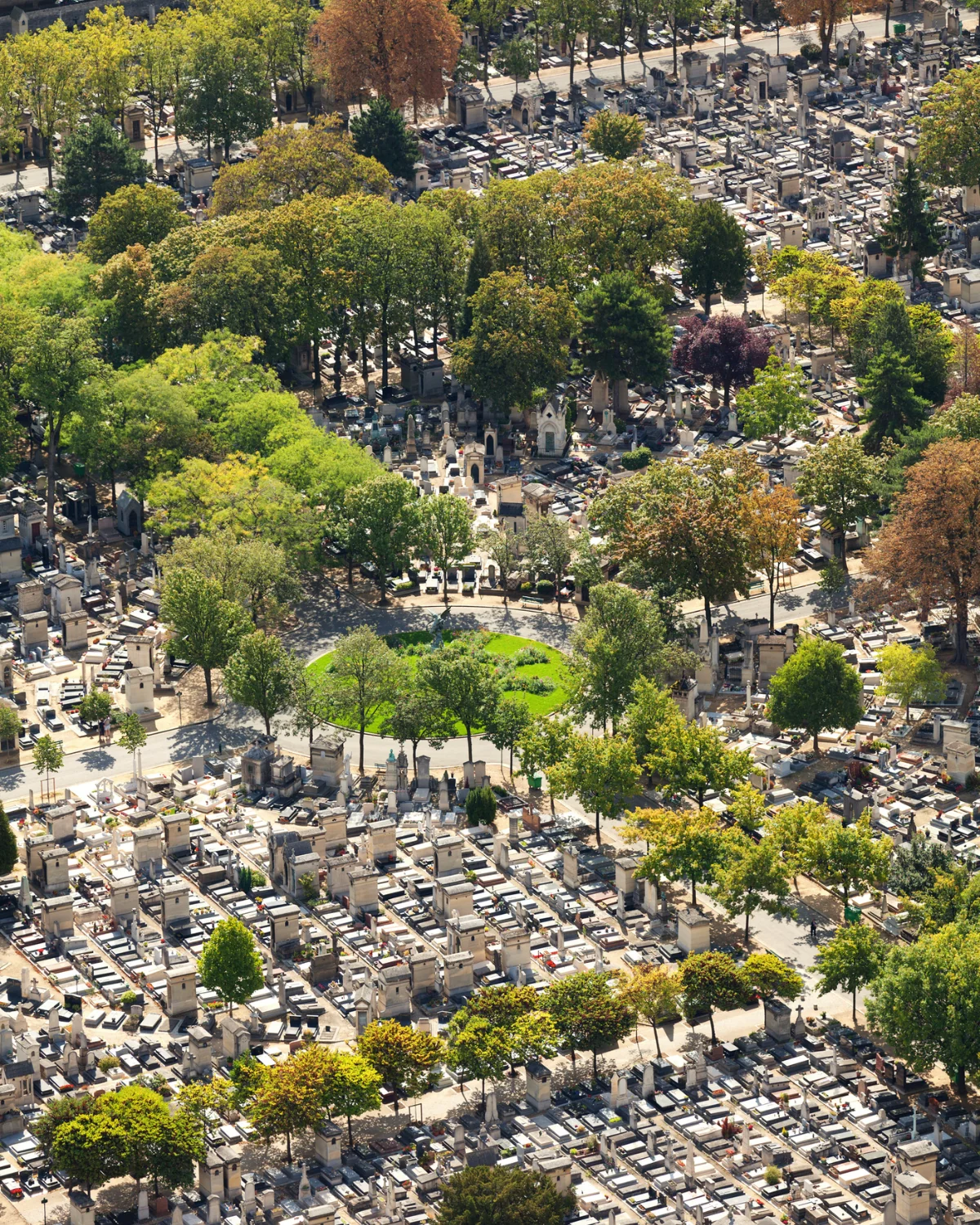
Quality of life in the 14th is that of an arrondissement that has remained on a human scale and authentic, despite its central Paris setting. The Parc Montsouris, with its 15 hectares of free lawn, romantic lake and centuries-old cedars, is one of the parks most valued by Parisian families. The Cité Universitaire Internationale, with its 40 country houses of varied architecture, creates a cosmopolitan and cultural atmosphere unique in the capital.
The Edgar Quinet market and rue Daguerre are two of the liveliest and most authentic open-air markets in Paris, with shopkeepers loyal across generations. The arrondissement is well served (lines 4, 6, 13 and RER B) and benefits from a dense fabric of local shops around rue d'Alésia. Several reputed schools and the legendary brasseries of Montparnasse complete a Left Bank quality of life that has few equivalents.
The Catacombs of Paris, which extend beneath almost the entire 14th arrondissement, were created in the 18th century to solve the public-health problem of overcrowded Parisian cemeteries. During the Second World War, the French Resistance set up its headquarters there, while the Germans organised their own secret meetings in other galleries — two enemy armies sometimes separated by only a few metres of limestone.
The brasserie La Coupole, opened in 1927 by the Lafon brothers, was built in 90 days and decorated its columns with paintings commissioned from local artists who agreed to paint them in exchange for free meals. Among these columns one can still recognise works by Fernand Léger, Marie Laurencin and Ossip Zadkine.
The Tour Montparnasse, inaugurated in 1973, sparked such an aesthetic uproar that the construction of towers within central Paris was banned the following year — a decision that still protects today the low and harmonious profile of the capital.
The 14th is the place where the intellectual history of Paris was for the longest time told quietly. The Villa Montparnasse, the studios on rue Campagne-Première and the legendary brasseries of place du 18-Juin-1940 still hold within their walls the memory of Hemingway, Picasso and Giacometti. Its residents value this heritage without making a museum of it: the Edgar Quinet market, the Parc Montsouris and the small streets of Plaisance offer them a rare neighbourhood life, almost provincial, in the heart of Paris. The arrondissement is also one of the pleasantest for cycling, with the Coulée Verte and the cycle lanes of boulevard Raspail — a detail that matters greatly to those who live there.— METROREALTY · 22 ans d'expertise à Paris
Each sector of the 14th has its identity, atmosphere and property typology. Click the map or cards to view their boundaries.
Montrouge, on the edge of Paris beside the town of the same name, is the quietest and most residential quarter of the 14th. Its town houses, small buildings from 1900 to 1930 and tree-lined streets give it an almost provincial feel that families value. Prices are more accessible than in the rest of the arrondissement, and the value for the location is excellent.
Parc-Montsouris is the most sought-after part of the 14th, with its buildings encircling the fine English-style park and the international student campus. Apartments overlooking the park, or the national pavilions of the Cité Universitaire, are rare and much in demand, particularly among families who value quiet and greenery.
Petit-Montrouge, around rue d'Alésia and boulevard Brune, is the busy, down-to-earth quarter of the 14th, with a dense retail life and the much-loved Edgar Quinet market. This is where the residents of the 14th who want genuine neighbourhood life settle, among traditional bistros, butchers and open-air markets.
Plaisance, around rue Raymond-Losserand and rue d'Alésia, is the most authentic and least visited quarter of the 14th. Its quiet streets, artists' studios and communal gardens make it popular with craftspeople and artists looking for space and calm within Paris. Prices remain accessible, despite a steady move upmarket.
Ossuaire souterrain (1786), 6 millions de Parisiens reposent à 20 m de profondeur.
Seul gratte-ciel intra-muros (1973), 210 m, panorama 360° sur Paris.
Sartre, Beauvoir, Baudelaire, Gainsbourg : sépulture des artistes.
Jardin à l'anglaise XIXᵉ, lac, cascade, observatoire astronomique.
Campus pluri-national fondé 1925, 40 maisons, jardin de 34 ha.
Rue piétonne marchande, marché traditionnel et bistrots authentiques.
Everything you need to know to sell your property successfully in the 14th arrondissement.
Buyer profiles, atmosphere and the property types in demand in the 14th arrondissement.
Two model strategies suited to central Paris, backed by 22 years of expertise on the ground.
The Parc Montsouris area is one of the most coveted in the 14th: large park, quality schools, calm. A well-located 4-room flat in this area is an excellent residential investment for a family planning to stay long-term.
The Pernety/Plaisance area has experienced gradual gentrification. Well-renovated 2-room and 3-room flats attract a young, dynamic population. Good rental yield and capital-gain potential for properties needing renovation.
METROREALTY has been guiding the most demanding transactions for 22 years in the 14th arrondissement. Our team knows every building, every staircase, every concierge. From negotiating an apartment at parc Montsouris to the sale of commercial premises at Montparnasse, we defend your interests with discretion and expertise.
Our base at 18 rue Molière, 200 metres from the Palais-Royal, gives us unmatched on-the-ground knowledge of the buildings, of the legal particulars — listed buildings, easements, pre-emption rights — and of the international buyers who make this market.
Estimate my property Paris 14thThe median price per sqm in the 14th arrondissement s'établit à 9 404 €/sqm en 2026 selon les données DVF DGFIP. La fourchette s'étend de 6 753 €/sqm (P10, entrée de gamme) à 12 143 €/sqm (P90, top 10 %), sur 1 557 transactions appartements enregistrées.
Over the past 12 months, prices changed by +5,8 % (Dec 2024 → Dec 2025). Over 5 years, the change is −11.6%, reflecting the Paris market correction after the 2020 peak. Premium areas (Parc Montsouris, Montparnasse nord) have held up better than average.
The 14th arrondissement market recorded 1 557 transactions in 2026 according to DVF DGFIP data. This volume reflects an active market with a diverse supply for various buyer profiles.
The 2025 DRIHL reference median rent is €26.8/sqm/month. The maximum permitted rent is €35.76/sqm, the minimum €20.86/sqm. The indicative gross yield is around 3,0 %.
The areas around parc Montsouris and Montparnasse, as well as Daguerre are the most sought-after in the 14th arrondissement.
No, the 14th is slightly more expensive (€9,350 against €8.510/sqm for the 13th). The 14th has more upmarket areas (Montsouris, Montrouge) that pull its average upwards.
Initial confidential discussion, no commitment. Our experts guide you through to signing.