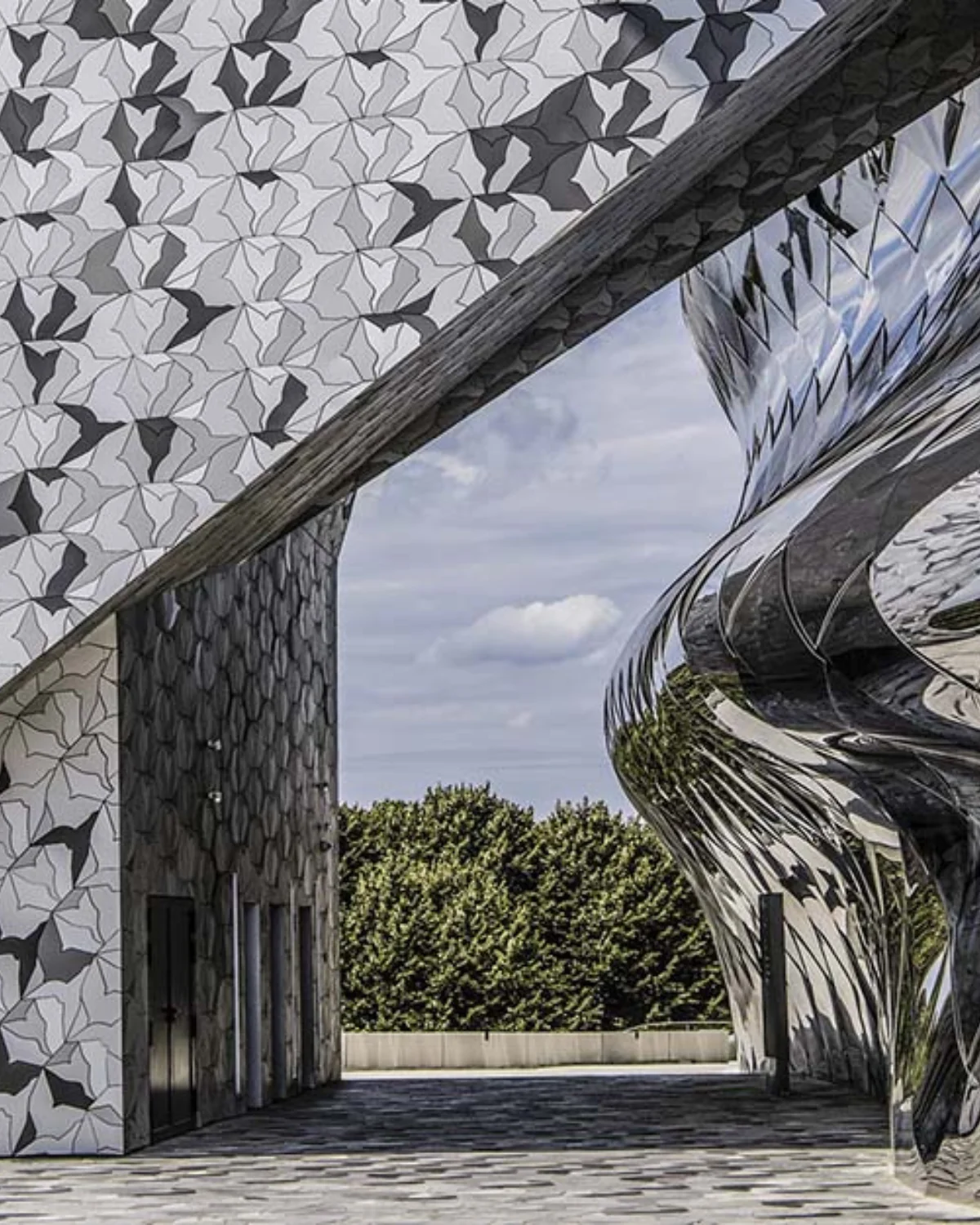
Buttes-Chaumont, Canal de l'Ourcq, La Villette: the 19th is Paris in full transformation. The most affordable prices within Paris and the best yields — an arrondissement for conviction investors. −0.3% in 2025: stabilisation after the correction, an entry window for patient investors.
The Parc des Buttes-Chaumont, one of the most beautiful in Paris, is the heart of life in the 19th arrondissement. The Canal de l'Ourcq is following the path of the Canal Saint-Martin 15 years ago: a transformation in progress that creates real opportunities.
With the most affordable prices within Paris (€7.560/sqm in 2025) and strong rental demand, the 19th offers the best gross yield of any Parisian arrondissement. A conviction market for patient and discerning investors.
The 19th arrondissement of Paris posts an average price of €7,560/sqm at the end of 2025, with annual growth of −0.3%. Average time to sell: 65 days.
An ultra-exclusive market, structurally constrained and sustained by permanent international demand.
Sources : Paris Notaires Services / Base BIEN (prix sqm T4 2025) · DRIHL 2025 (loyer encadré) · DVF DGFIP 2025 (volumes transactions)
Indice Notaires-INSEE — moyenne trimestrielle standardisée appartements anciens · 120 trimestres · 1996-2025.
The 19th arrondissement posts a median price of €8,037/sqm in 2025 (DVF, DGFIP), ranging from 5,762 to €10,440/sqm across 1,536 transactions.
With an average price of €7,560/sqm, the 19th arrondissement has a clearly defined market profile. Buyers find a specific combination of heritage, quality of life and accessibility.
56 594 energy diagnostics issued for apartments since July 2021. La classe DPE weighted average s'établit à D.
Source: ADEME — DPE Dwellings existants (since July 2021) · filtre type_batiment=appartement, code_postal_ban=75019.
Go further — prices by street, by address and by quarter: Paris 19e arrondissement on data.metrorealty.fr.
The 19th arrondissement, with La Villette, the Buttes-Chaumont and the Canal de l'Ourcq, is the Paris of the future and of fully-embraced diversity. Transformed since the 1980s by François Mitterrand's grand projects, it now hosts the Philharmonie de Paris, the Cité des Sciences and some of the most forward-looking cultural venues in the capital — and offers, in its village quarters and along its waterways, a quality of life that long-term residents value as a quiet privilege.
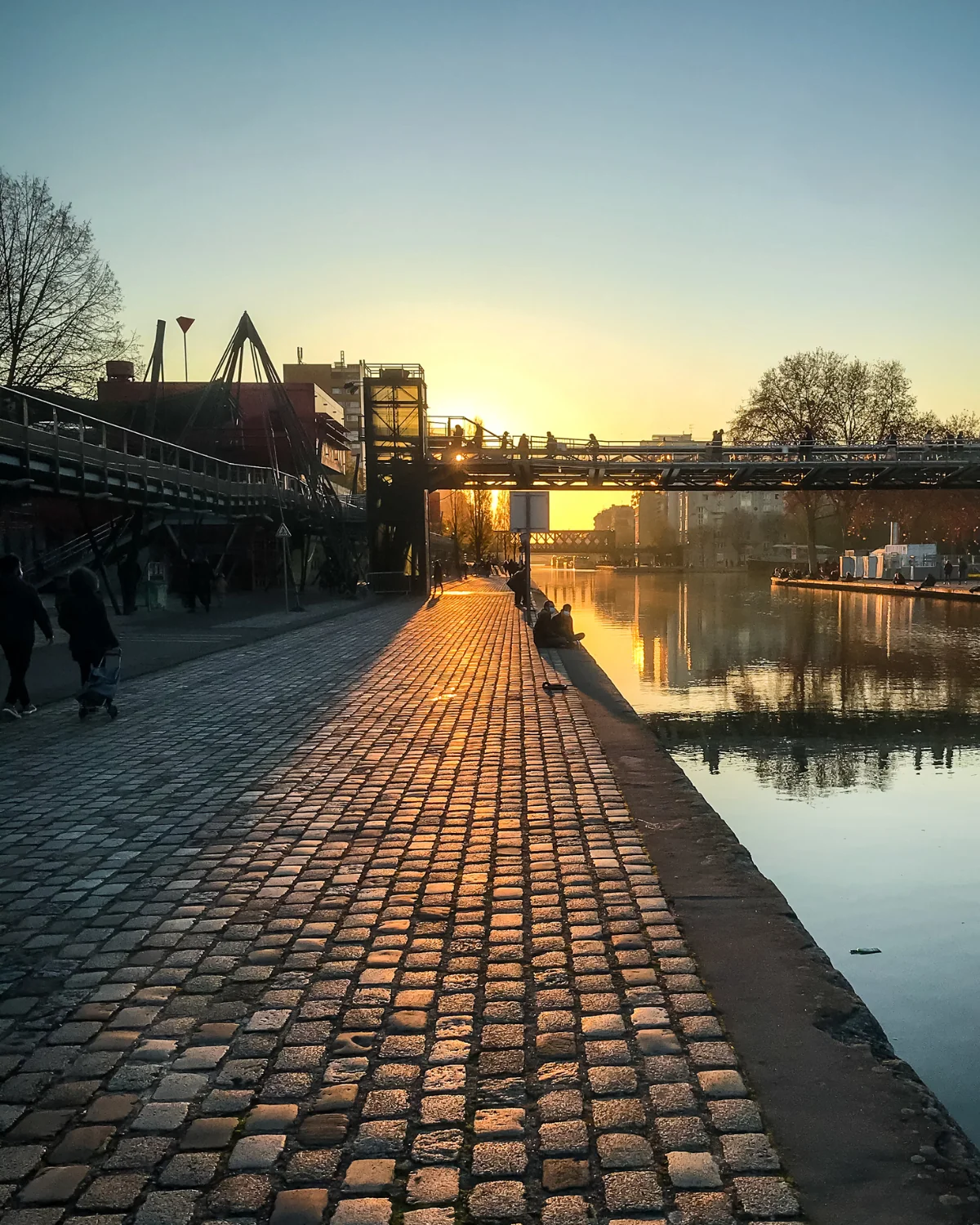
Quality of life in the 19th is that of a Paris that remains accessible, generous in green space and intensely cultural. The Parc de la Villette, with its 55 hectares, its open-air summer concerts, its Grande Halle and its red Tschumi follies, is the most innovative cultural space in Paris. The Parc des Buttes-Chaumont, the most romantic of the city's parks with its cliffs, its lake and its artificial grotto, is an exceptional pocket of greenery within the dense fabric of the capital.
The Canal de l'Ourcq, with its barges turned into bars and restaurants, creates a festive atmosphere all year round. The Philharmonie de Paris, opened in 2015, has lifted the arrondissement to the rank of the great musical capitals of the world. The cultural and gastronomic diversity of the 19th makes it one of the most stimulating and most open arrondissements in Paris — and one whose residents actively defend its mixed character against any temptation of standardisation.
The Parc de la Villette, designed by the architect Bernard Tschumi from 1987, was the first Parisian park conceived not as a piece of artificial nature but as a cultural and social infrastructure. Its 26 red "follies", distributed on a regular grid, form a conceptual artwork that children have happily transformed into a playground.
The Géode, with its 36-metre polished steel dome reflected in a mirror pool, is one of the most photographed architectural structures in Paris. Its design by engineer Adrien Fainsilber in 1985 posed major technical challenges: the spherical perfection of the dome required stainless steel plates cut to a precision of a few millimetres each.
The Canal de l'Ourcq, 108 kilometres long from its sources in the Seine-et-Marne to the Bassin de la Villette, still supplies Paris with non-potable water for street washing and for the city's fountains. It remains the only navigable pleasure canal whose departure point lies inside Paris itself.
The 19th is going through a transformation that its residents experience as a quiet, well-earned pride. The Parc des Buttes-Chaumont, one of the most beautiful and most untamed parks in Paris with its cliffs, its lake and its romantic grotto, is the open-air drawing room and the green lung of the entire arrondissement. Along the Canal de l'Ourcq, the floating bars on the péniches, the artists' studios and the ambitious architectural projects testify to an urban creativity that has not finished surprising. Its residents, drawn from very different horizons, share a common love for a city that reinvents itself without losing its soul — and METROREALTY is convinced the market has not yet fully reflected that reality.— METROREALTY · 22 ans d'expertise à Paris
Each sector of the 19th has its identity, atmosphere and property typology. Click the map or cards to view their boundaries.
Villette, around the great park and the science museum, is the most transformed and most dynamic quarter of the 19th. Well-built new developments, cultural venues of international standing and the Ourcq canal nearby draw a young and creative population. This is where the prospects for appreciation are highest in the arrondissement.
Pré-Saint-Gervais, on the eastern edge of Paris beside the neighbouring towns, is the quietest and most residential quarter of the 19th. Its tree-lined streets, town houses and small buildings from the 1930s to the 1950s create an almost suburban atmosphere that families appreciate. Prices are accessible and represent good value for buyers who put calm first.
Amérique, between Belleville and La Villette, is the most cosmopolitan and animated quarter of the 19th. Its shops from around the world, its Asian, African and North African restaurants and its constant street life make it a thrilling place to eat. Apartments in the 1970s and 1980s buildings offer good floor areas at prices that remain accessible.
Combat, around the Parc des Buttes-Chaumont and rue de Belleville, is at once the most down-to-earth and the most gentrified quarter of the 19th. Its natural-wine restaurants, speciality coffee shops and art galleries have turned a once working-class district into a destination for food and culture, well known across the arrondissement. Prices have risen sharply since 2010, but remain within reach.
Jardin escarpé Napoléon III 1867, île, grotte, pont des Suicidés et belvédère.
Plus grand plan d'eau intra-muros, péniches, cinéma plein air l'été.
Designed by Jean Nouvel in 2015: concert halls and the museum of music.
The largest cultural park in Paris, with the Géode, the science museum and its red follies.
Barrière d'octroi Ledoux 1788, rotonde néo-classique reconvertie en restaurant.
Voie d'eau de 108 km since 1808, terrasses bobo et péniches culturelles.
Everything you need to know to sell your property successfully in the 19th arrondissement.
Buyer profiles, atmosphere and the property types in demand in the 19th arrondissement.
Two model strategies suited to central Paris, backed by 22 years of expertise on the ground.
The Buttes-Chaumont area is the hidden gem of the 19th. Apartments with a view of the park attract a family clientele looking for space and nature within Paris, with above-average value appreciation.
With the lowest prices in central Paris and proportionally high rents, the 19th offers the best gross yield. It is the arrondissement of investors focused on immediate yield.
METROREALTY has been guiding the most demanding transactions for 22 years in the 19th arrondissement. Our team knows every building, every staircase, every concierge. From negotiating an apartment at Buttes-Chaumont to the sale of commercial premises at Bassin de la Villette, we defend your interests with discretion and expertise.
Our base at 18 rue Molière, 200 metres from the Palais-Royal, gives us unmatched on-the-ground knowledge of the buildings, of the legal particulars — listed buildings, easements, pre-emption rights — and of the international buyers who make this market.
Estimate my property Paris 19thThe median price per sqm in the 19th arrondissement s'établit à 8 037 €/sqm en 2026 selon les données DVF DGFIP. La fourchette s'étend de 5 762 €/sqm (P10, entrée de gamme) à 10 440 €/sqm (P90, top 10 %), sur 1 536 transactions appartements enregistrées.
Over the past 12 months, prices changed by −0,3 % (Dec 2024 → Dec 2025). Over 5 years, the change is −15.8%, reflecting the Paris market correction after the 2020 peak. Premium areas (Buttes-Chaumont, Canal de l'Ourcq) have held up better than average.
The 19th arrondissement market recorded 1 536 transactions in 2026 according to DVF DGFIP data. This volume reflects an active market with a diverse supply for various buyer profiles.
The 2025 DRIHL reference median rent is €23.0/sqm/month. The maximum permitted rent is €35.76/sqm, the minimum €20.86/sqm. The indicative gross yield is around 3,0 %.
The areas around Buttes-Chaumont and Bassin de la Villette, as well as parc de la Villette are the most sought-after in the 19th arrondissement.
The Canal de l'Ourcq is following the same path as the Canal Saint-Martin in 2005-2010: guinguettes, bars and restaurants are gradually settling along the quays. The transformation is real but slower. Properties close to the quays already enjoy a premium of 5 to 10%.
Initial confidential discussion, no commitment. Our experts guide you through to signing.