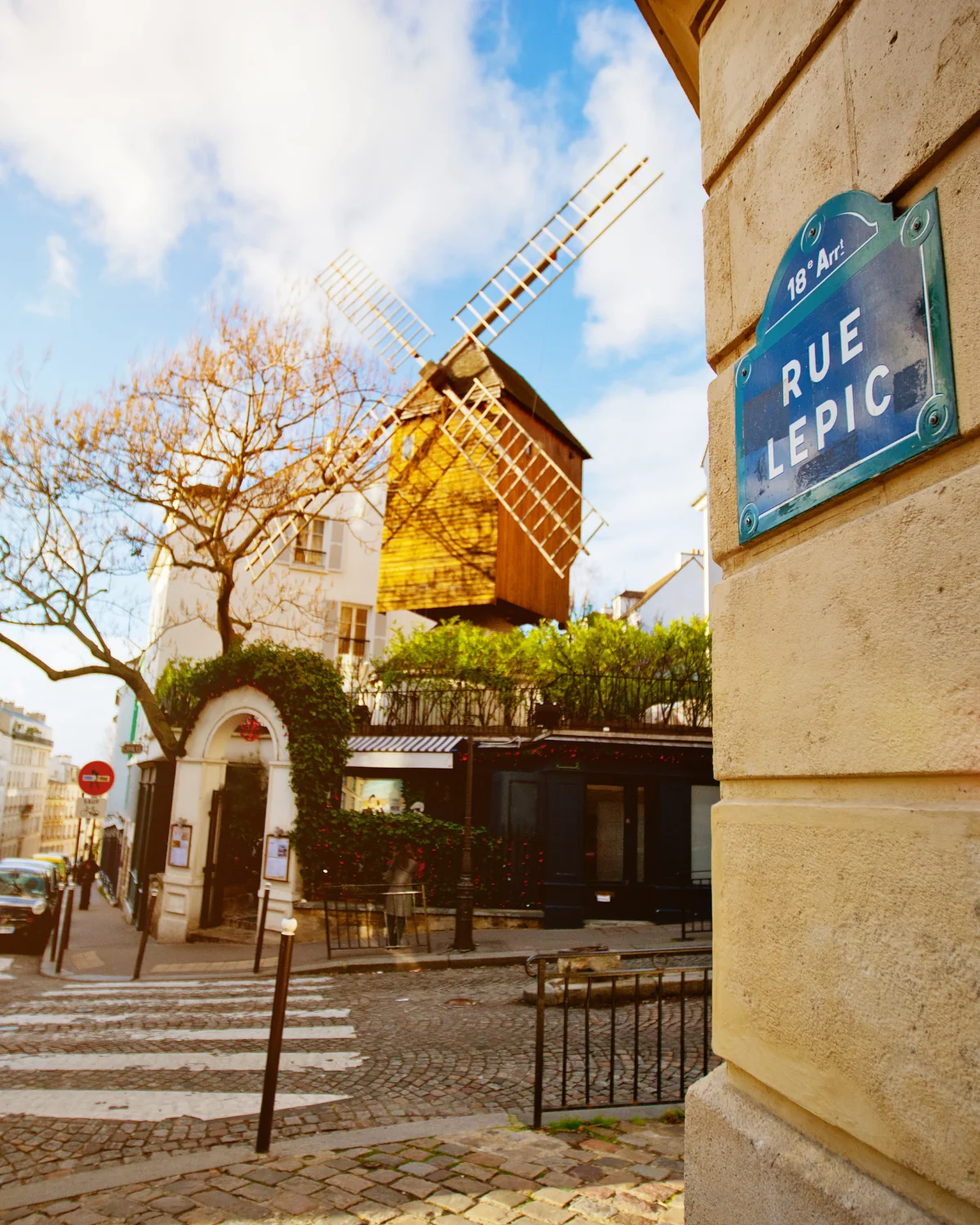
Sacré-Cœur, Moulin Rouge, Place du Tertre: the 18th is the most picturesque arrondissement in Paris. Between global tourism and authentic village life — a very tight rental market with the best yields within Paris. +1.9% in 2025 — the hill continues to seduce.
From Place du Tertre to the Sacré-Cœur, the Montmartre hill is one of the most photographed places in the world. The 18th combines an exceptional bohemian heritage with an authentic village life that its residents wouldn't trade for anything.
With an average of €8.530/sqm (Notaires, late 2025) and strong rental demand, the 18th offers one of the best gross yields within Paris. The Abbesses-Lepic district is the most valued and most liquid in the arrondissement.
Le 18th arrondissement de Paris affiche un prix moyen de 8 530 €/sqm à fin 2025, avec une évolution annuelle de +1,9 %. Délai de vente moyen : 60 jours.
Un marché ultra-exclusif, structurellement contraint, soutenu par une demande internationale permanente.
Sources : Paris Notaires Services / Base BIEN (prix sqm T4 2025) · DRIHL 2025 (loyer encadré) · DVF DGFIP 2025 (volumes transactions)
Indice Notaires-INSEE — moyenne trimestrielle standardisée appartements anciens · 120 trimestres · 1996-2025.
Le 18th arrondissement affiche un prix médian de 8 824 €/sqm en 2025 (DVF DGFIP), avec une fourchette de 5 854 à 12 145 €/sqm sur 3 065 transactions.
Avec un prix moyen de 8 530 €/sqm, le 18th arrondissement présente un profil de marché bien identifié. Les acquéreurs y trouvent une combinaison spécifique de patrimoine, qualité de vie et accessibilité.
62 046 energy diagnostics issued for apartments since July 2021. La classe DPE weighted average s'établit à E.
Source: ADEME — DPE Dwellings existants (since July 2021) · filtre type_batiment=appartement, code_postal_ban=75018.
Montmartre, the Butte of artists and the Sacré-Cœur, is the most photographed arrondissement in Paris and one of the most lived-in. The 18th is also the arrondissement of the Goutte d'Or, a vibrant multicultural quarter, and of Barbès, one of the most authentic markets in the capital — a duality that gives this unique arrondissement all of its richness and complexity, and an attachment from its residents that no other district inspires quite as fiercely.
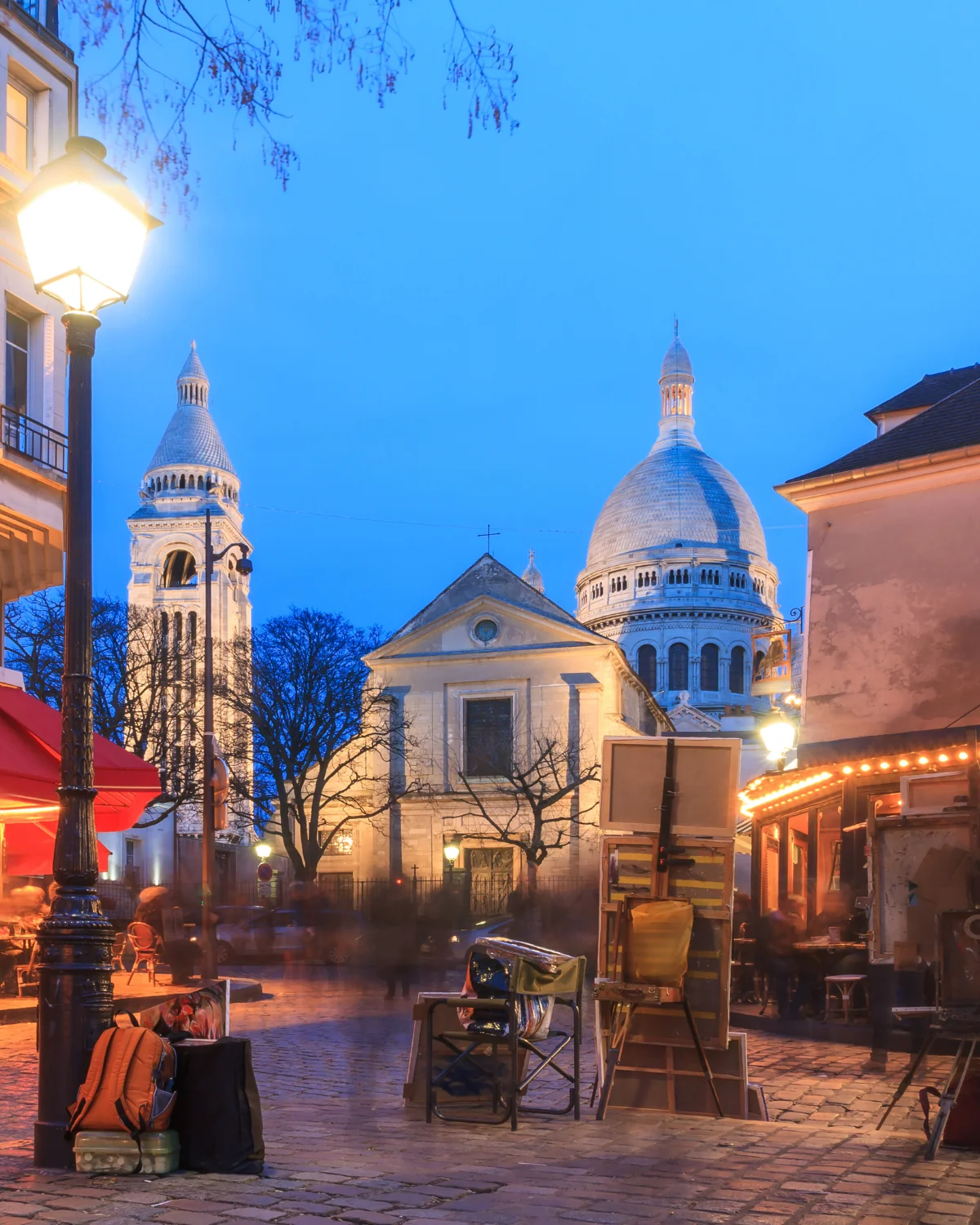
To live in Montmartre is to enjoy the most spectacular view in Paris from the parvis of the Sacré-Cœur, vines in the heart of the city, sloping streets where steps replace pavements, and a village atmosphere that is unique in the capital. The Place du Tertre and rue Lepic are the living heart of a quarter where café terraces and galleries follow one another in a postcard setting that residents know how to navigate quietly, away from the crowds.
But the 18th is also about diversity: the Goutte d'Or with its African grocers and restaurants from every corner of the world, the Barbès market — one of the liveliest in Paris — and the lower Montmartre, transformed into a creative gastronomic sector. The arrondissement is one of the most endearing of Paris, with a population deeply attached to its identity and to the singular mixed character that makes the 18th unlike anywhere else in the capital.
The Bateau-Lavoir, Picasso's studio where Les Demoiselles d'Avignon was painted (1907), owes its name to its resemblance to the Seine's wash-boats. This wooden building, destroyed by fire in 1970, sheltered in the 1900–1910 years the studios of Picasso, Braque, Juan Gris and dozens of other artists who invented Cubism in poverty and exaltation.
The vineyards of Montmartre, planted in 1933 to revive the Butte's wine-making tradition, produce around 700 bottles of Pinot Noir and Gamay each October during a festive harvest watched by thousands of Parisians. The wine, auctioned for the social works of the 18th, is not of exceptional quality — but its price reaches record levels every year.
The Basilique du Sacré-Cœur, funded by national subscription after the 1870 defeat and the Commune, was built on the Butte Montmartre because the project's promoters considered that this dominant hill should be "consecrated to national repentance". Construction lasted 35 years (1875–1910), with a site that constantly battled the instability of the limestone subsoil.
To climb up to Montmartre is always to feel something — even for those who have lived at the foot of the Butte for twenty years. The place du Tertre, despite the visitors from every corner of the world, keeps in its adjoining lanes a village atmosphere where artists, craftsmen and long-established families share an easy, precious familiarity. The view from the Sacré-Cœur forecourt at sunset remains one of the most striking in Paris — a vision its residents share generously and never tire of. What MetroRealty values most in the 18th is precisely this unique ability to be at once the most photographed quarter in the world and one of the truest places to live.— METROREALTY · 20 ans d'expertise à Paris
Each sector of the 18th has its identity, atmosphere and property typology. Click the map or cards to view their boundaries.
Grande-Carrière, quartier central de Montmartre autour de la mairie, est le secteur le plus équilibré et le plus agréable à vivre du 18ème. Ses rues calmes, ses marchés de proximité et sa population mixte de résidents anciens et de nouveaux arrivants créent une vie de quartier authentique. Les appartements dans les immeubles Belle Époque sont très demandés pour leur charme et leurs volumes généreux.
Clignancourt, au nord de l'arrondissement, est le quartier le plus populaire et le plus animé du 18ème après Montmartre. Sa proximité avec les marchés aux puces de Saint-Ouen, son marché de la rue Dejean et sa population diverse lui confèrent une énergie singulière. Les prix y sont parmi les plus accessibles de l'arrondissement, avec un potentiel de valorisation significatif.
Goutte-d'Or est le quartier le plus multiculturel et le plus vibrant du 18ème, premier quartier africain et maghrébin de Paris. Ses marchés colorés, ses épiceries exotiques et ses restaurants du monde entier en font un secteur gastronomiquement passionnant. Le quartier est en pleine transformation since les années 2010, avec des projets de réhabilitation qui attirent de nouveaux profils d'acquéreurs.
Chapelle, autour de la gare de la Chapelle et du boulevard périphérique, est le quartier le plus en mutation du 18ème. Les projets de réaménagement autour de la Porte de la Chapelle et les programmes immobiliers neufs attirent des investisseurs qui misent sur la transformation du secteur. C'est ici que se trouvent les prix les plus bas du 18ème et les opportunités les plus intéressantes pour les acquéreurs avec un horizon long terme.
Basilique romano-byzantine 1914, point culminant de Paris (130 m).
Cœur touristique de Montmartre, peintres, terrasses et ambiance bohème.
Cabaret 1889 mythique, French cancan et revue Féerie since Toulouse-Lautrec.
Plus grand marché aux puces du monde, antiquaires et brocanteurs.
Sépulture artistes XIXᵉ : Stendhal, Berlioz, Truffaut, Dalida.
Cœur villageois de Montmartre, marché Lepic et Amélie Poulain.
Tout ce qu'il faut savoir pour réussir la vente de votre bien dans le 18th arrondissement.
Profil acquéreur, ambiance et typologies recherchées dans le 18th arrondissement.
Deux stratégies-types adaptées au cœur de Paris, mises en œuvre par 20 ans d'expertise terrain.
Montmartre is a global tourist destination. Well-located properties on long-term lets generate excellent yields. Demand far exceeds supply in this very visible and emblematic area.
For a first-time buyer with €250,000 to €450,000, the 18th still offers opportunities with character. The Guy Môquet and Simplon areas offer good 10-year value-appreciation potential.
METROREALTY has been guiding the most demanding transactions for over 20 years du 18th arrondissement. Notre équipe connaît chaque immeuble, chaque cage d'escalier, chaque gardien. De la négociation d'un appartement Sacré-Cœur à la cession d'un local commercial Abbesses, nous défendons vos intérêts avec discrétion et expertise.
Notre implantation au 18 rue Molière, à 200 mètres du Palais-Royal, nous donne une connaissance terrain inégalée des copropriétés, des particularités juridiques (immeubles classés, servitudes, droits de préemption) et des acquéreurs internationaux qui font le marché.
Estimate my property Paris 18thThe median price per sqm in the 18th arrondissement s'établit à 8 824 €/sqm en 2026 selon les données DVF DGFIP. La fourchette s'étend de 5 854 €/sqm (P10, entrée de gamme) à 12 145 €/sqm (P90, top 10 %), sur 3 065 transactions appartements enregistrées.
Over the past 12 months, prices changed by +1,9 % (Dec 2024 → Dec 2025). Over 5 years, the change is −15.4%, reflecting the Paris market correction after the 2020 peak. Premium areas (Abbesses, Lepic) have held up better than average.
The 18th arrondissement market recorded 3 065 transactions in 2026 according to DVF DGFIP data. This volume reflects an active market with a diverse supply for various buyer profiles.
The 2025 DRIHL reference median rent is €25.0/sqm/month. The maximum permitted rent is €35.76/sqm, the minimum €20.86/sqm. The indicative gross yield is around 3,0 %.
The areas around Sacré-Cœur and Abbesses, as well as rue Lepic are the most sought-after in the 18th arrondissement.
The Barbès, La Chapelle and Marx Dormoy areas are benefiting from major urban regeneration projects. Prices there are among the lowest in central Paris, and 10-year capital-gain potential is real, but the risk remains higher than elsewhere.
Initial confidential discussion, no commitment. Nos experts vous accompagnent jusqu'à la signature.